DASHBOARD
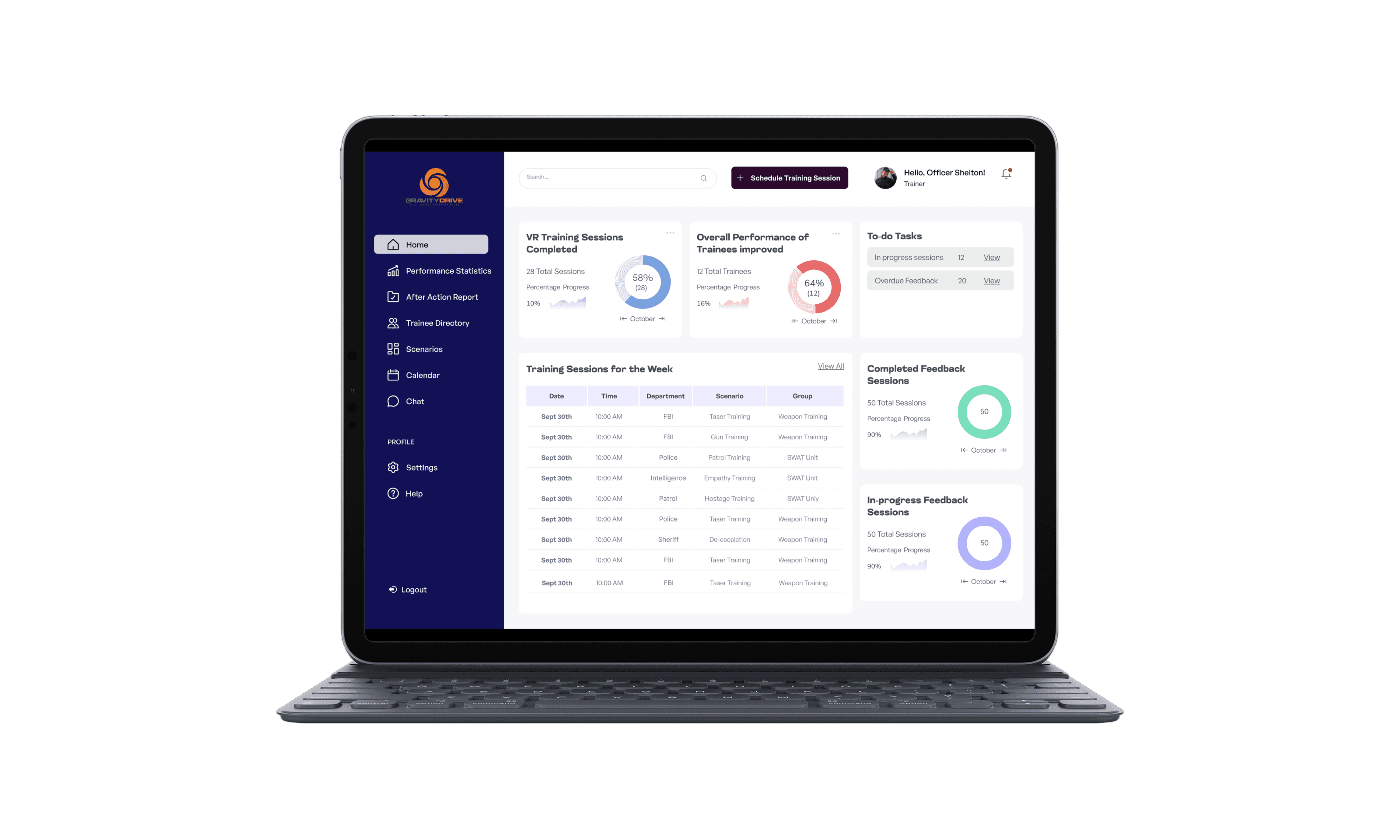
Easily plan and manage training sessions across departments, scenarios, and groups to ensure structured and consistent training delivery.
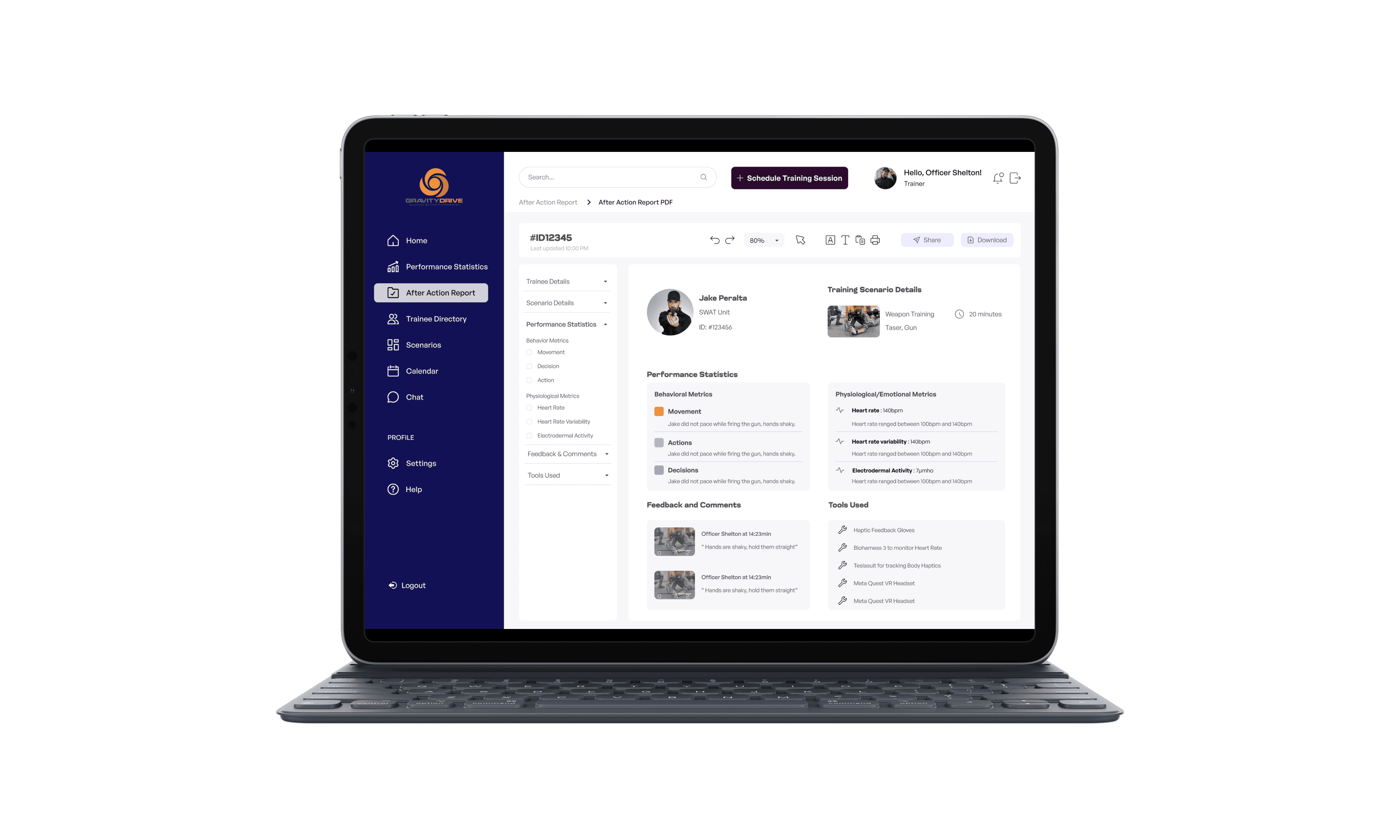
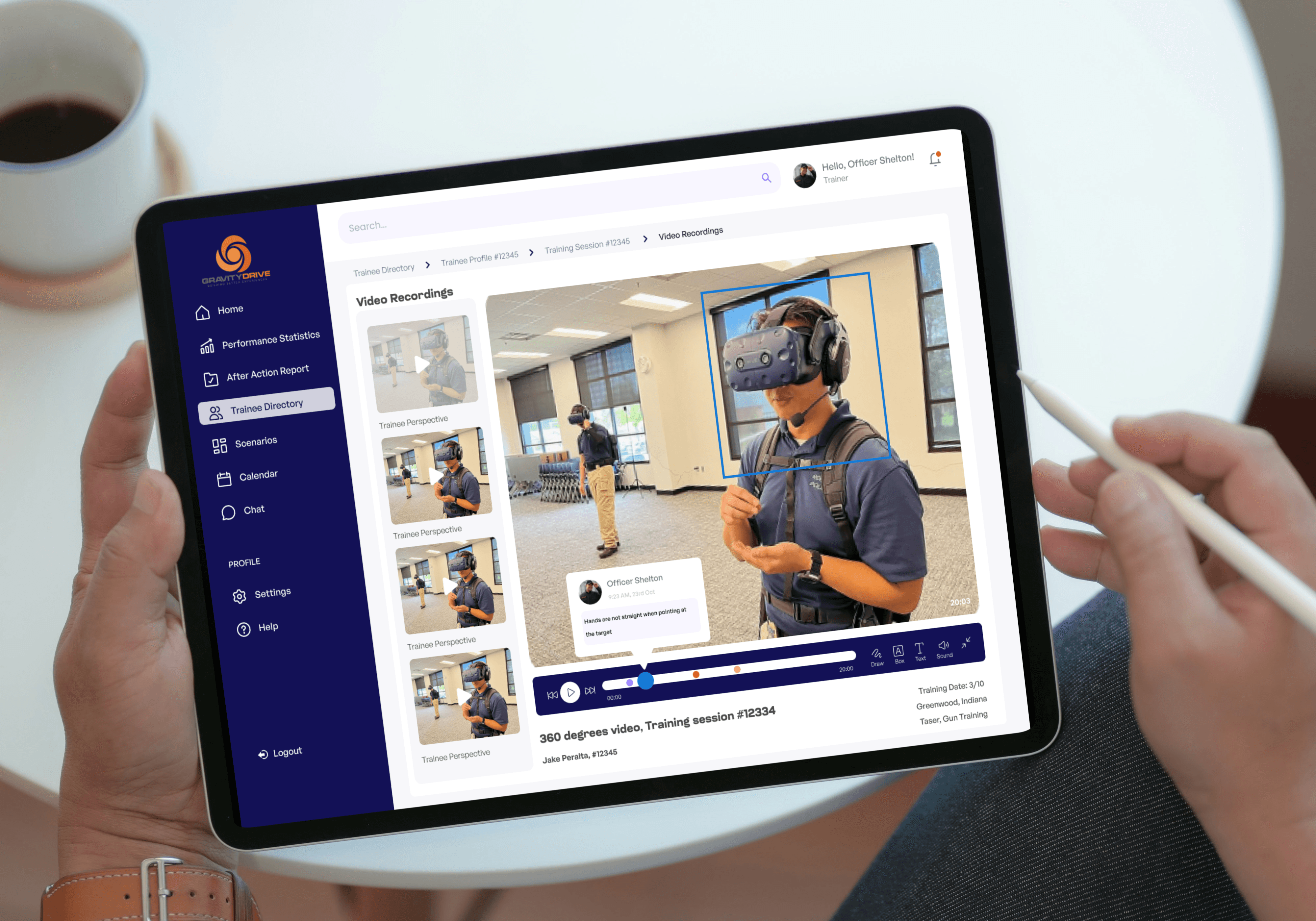
Trainers gained a centralized view of session data, behavioral metrics, and physiological signals, allowing them to understand trainee performance better and identify
areas for improvement across sessions.
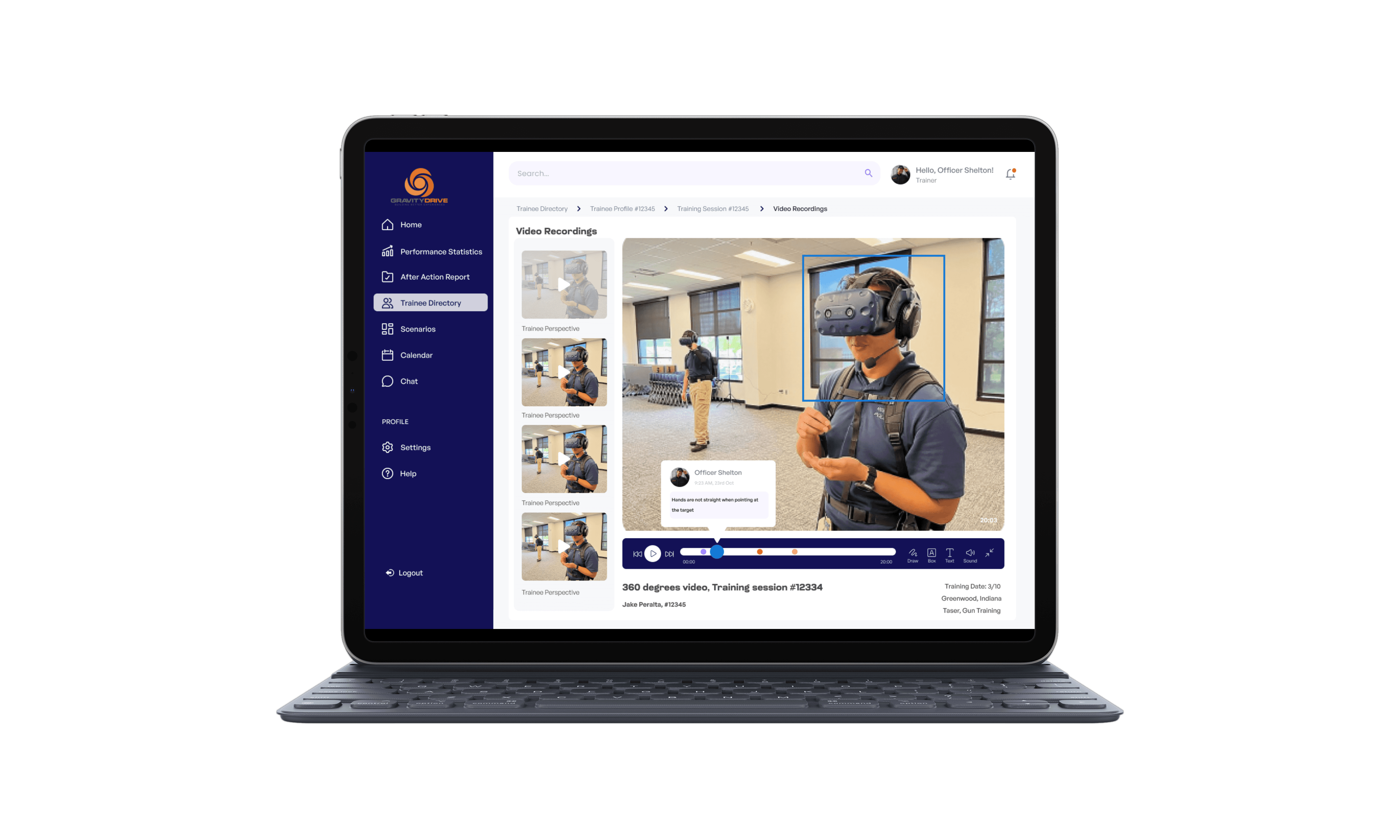
The introduction of playback tools and structured reports streamlined post-training discussions, helping instructors provide targeted feedback and reinforce learning
immediately after simulations.
By surfacing actionable insights, such as behavioral patterns, stress indicators, and scenario outcomes, the system supported more informed evaluations of trainee
readiness in high-pressure situations.
The platform closed the gap between simulation and reflection by enabling trainees to review sessions, learn from mistakes, and track progress over time, fostering
continuous improvement.
ROLE
DURATION
UX Designer
52 Weeks
The initiative focuses on creating scalable training experiences that enable professionals to practice complex scenarios and receive actionable feedback.
Conducted exploratory research to understand the complexities of training in high-pressure environments and the challenges faced by trainers and trainees.
Reviewed existing VR training tools, studied decision-making under stress, and gathered insights through interviews and secondary research to identify gaps in
current training methods.
Design & Prototyping
Developed wireframes and interactive prototypes to explore training scenarios, trainer dashboards, and performance review workflows. Iterated on designs to reduce cognitive load and ensure critical information was presented clearly during high-stress moments. Focused on creating intuitive interfaces that balance immersive experiences with practical usability for trainers monitoring sessions.
Solution
Research & Discovery
Real-Time Instructor
Visibility
Behavioral Insights &
Feedback
Adaptive Learning
Experience
Continuous Learning
Loop
Post-training analytics highlight performance trends, helping officers reflect on actions, understand outcomes, and identify opportunities for improvement.
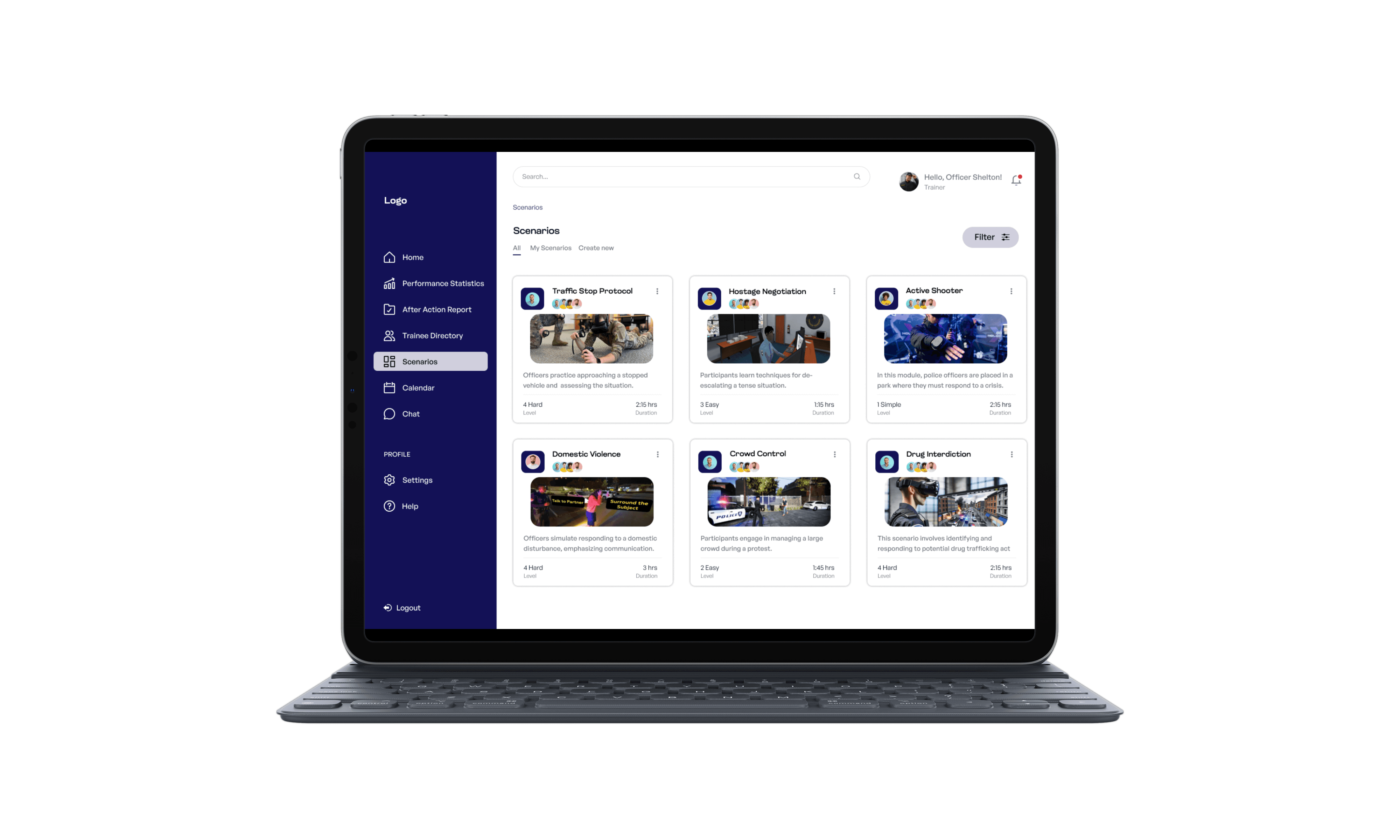
Training scenarios can be customized based on skill level, training goals, or department needs, supporting personalized learning paths.
The platform encourages iterative learning by enabling repeat practice, progress tracking, and data-driven adjustments to training programs.
Interactive simulations allow officers to engage with realistic situations such as conflict resolution, crisis response, and community interactions, enabling
hands-on learning in a controlled environment.
Instructors can monitor sessions as they unfold, observing decision points, communication patterns, and responses, allowing immediate guidance and
more effective coaching.
Partnered on designing a behavioral VR training system aimed at improving preparedness and decision-making through immersive simulations and performance analytics.
Background
Debriefing Matters
Observers often take notes during training sessions, underscoring the importance of a relaxed atmosphere during debriefing. Participants felt it was crucial to learn from mistakes and understand the consequences of their actions.
This project introduced a structured, data-driven approach to evaluating VR training, enabling trainers and departments to move beyond observation-based assessments toward measurable performance insights.
Results
Improved Training Visibility
Faster, More Effective
Debriefs
Increased Decision
Confidence
Enhanced Learning Loop
BEHAVIORAL VR TRAINING FOR LAW ENFORCEMENT
COMPANY
GravityDrive
Designing safer, data driven training for high- stakes
decision making
Project description
Problem Statement
Process
Partnered on designing a behavioral VR training system aimed at improving preparedness and decision-making through immersive simulations and performance analytics.
This section outlines the structured, human-centered approach used to design a behavioral VR training system, from understanding real-world challenges to developing solutions that support effective learning and performance evaluation.
"How might we leverage data from VR training equipment to develop a Tracking & Evaluation system that enhances training and unlocks the full potential of these VR systems?"
Background
Research & Discovery
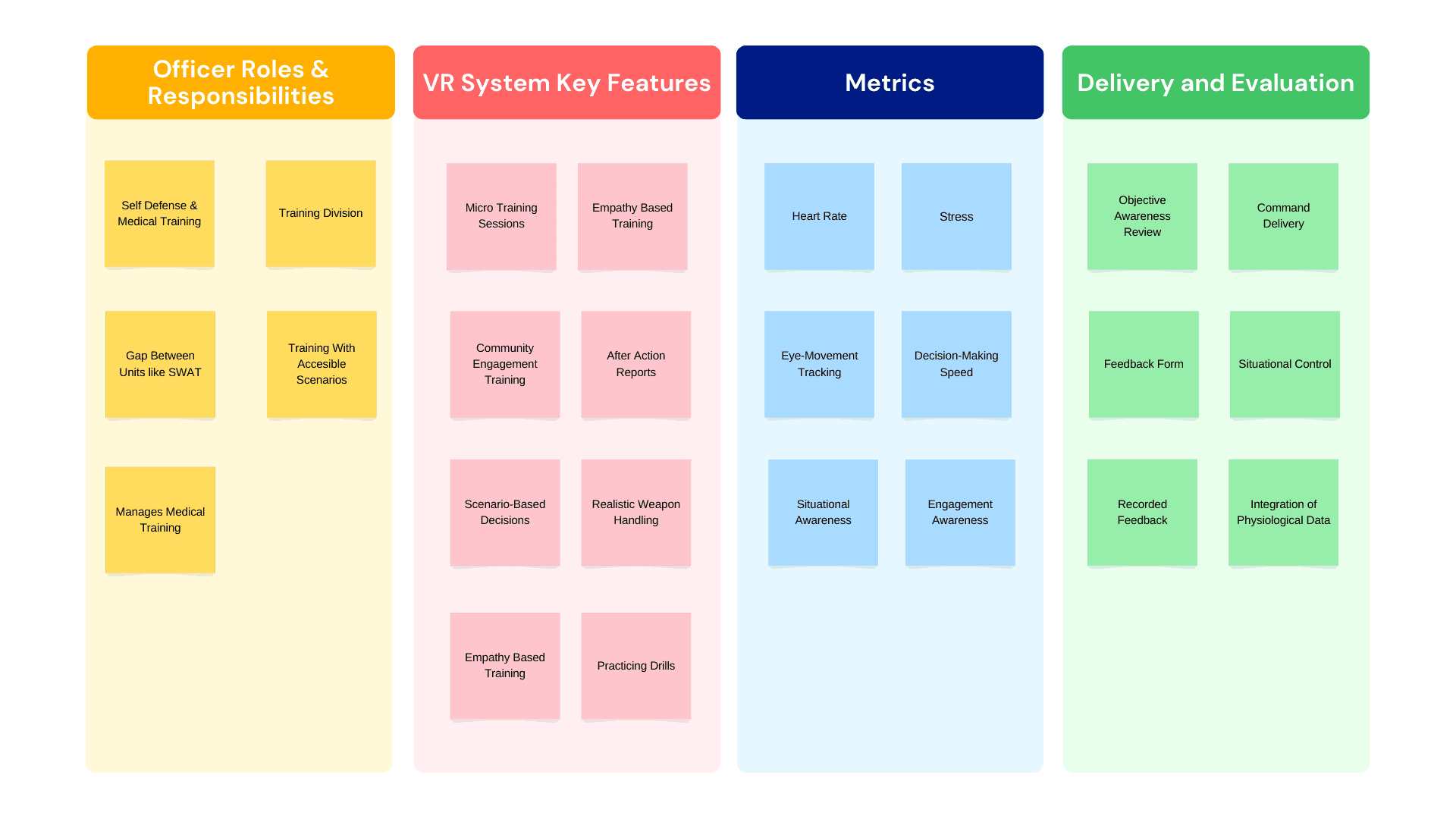
Affinity Mapping
Interview Insights
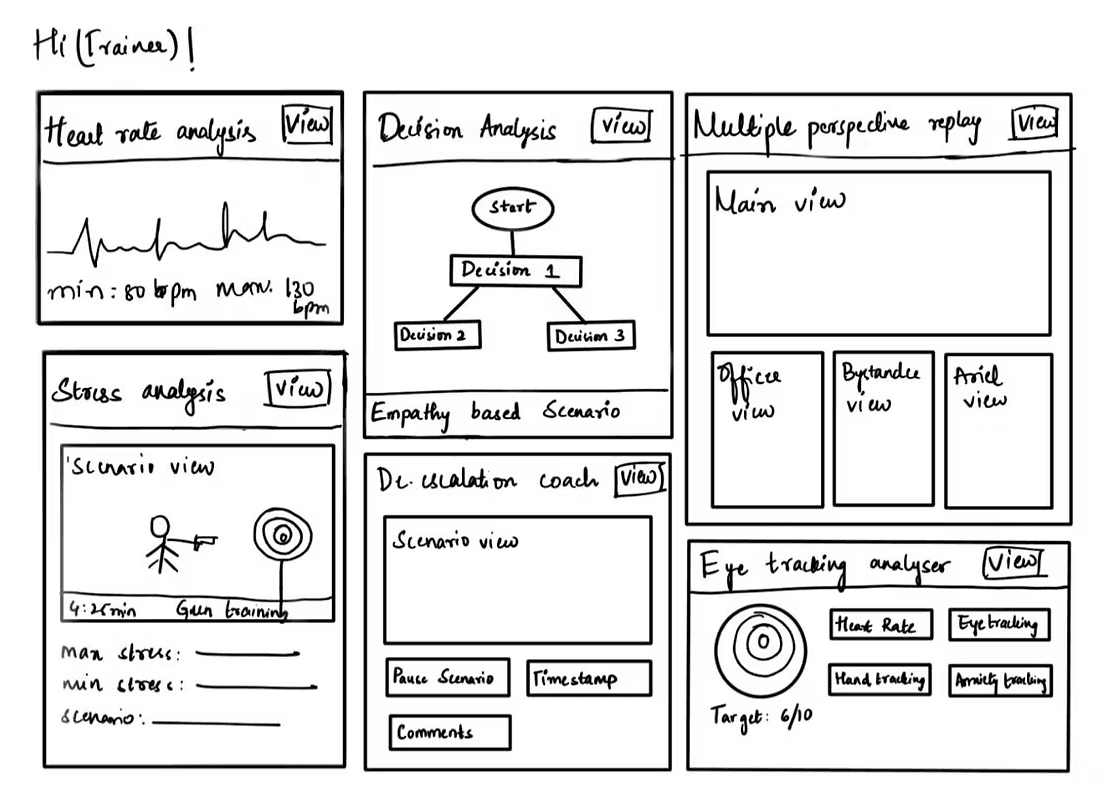
Information Architecture

Feedback
is Essential training feedback begins at the start of debriefings and includes both verbal and written input, which is crucial for continuous improvement.
Playback Functionality
a notable gap in current VR training is the lack of a playback feature. Trainees expressed a strong interest in being able to review their performance, compare it to peers, and set goals for improvement.